Thursday, August 9, 2012
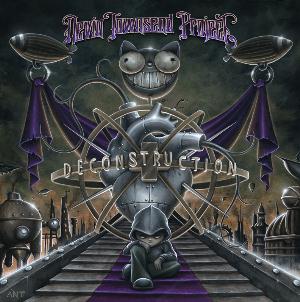
Deconstruction (Devin Townsend)
Year: 2011
I love Devin Townsend. I like his music. I like his humor. I especially like it when he combines his humor with his music, as he did so well in Ziltoid, the Omniscient. Unfortunately, I think he really goes WAY over-the-top in about every area imaginable in the production of Deconstruction. I have already reviewed Ghost (which was released at the same time) and lamented how he left the center of his typical musical universe to explore the extreme edges. Ghost was too soft. Deconstruction is too...well, everything. You name it, Deconstruction has too much of it.
Townsend loves to create a wall of sound, but with this album he has created walls upon walls of sounds and the overall effect is ultimately more distracting (assaulting is the better word) than pleasing to my ears.
The album starts off quite nicely with the opening moments of "Praise the Lowered" which steadily increases in intensity and volume to become somewhat of a frothing mess which is a precursor of things to come.
"Stand" follows and is a great track, right in the wheelhouse for what makes Devin such a great artist. It is heavy, with lots of layered guitar parts providing unique sounds in conjunction with Devin's vocal arrangements. However, the sonic assault has yet to truly begin. "Juular" is reminiscent of the "Vampolka"-"Vampira" combo from Synchestra. It comes fast and furious and it is becoming apparent that Townsend is throwing more and more into the mix.
"Planet of the Apes" is next and starts out well enough with a heavy off-beat groove. The drums and samples are a bit annoying here though as everything sounds way too programmed. I do enjoy the change of pace though that this song goes through especially around the 6-minute mark. Devin's vocals are great though in this song, especially when he is not screaming.
"Sumeria" continues the heavy programming sound which I don't care for and the walls of sound begin to grate on me even though there are some nice musical moments here. But this is about where Devin loses me on this album. "The Mighty Masturbator" is the next song and it starts innocently enough, but with a title like that you know the opening soft, acoustic sounds are momentary. Between "Masturbator", "Pandemic" and "Deconstruction", there is just too much silliness and loud loudness to the point where everything just feels overbearing.
Devin will be Devin. Walls of sound, passing gas, references to both male and female sex organs are in full supply on this album. It's just too much for me. I'm so worn out after listening to this album that Ghost all of a sudden seems like a welcome change.
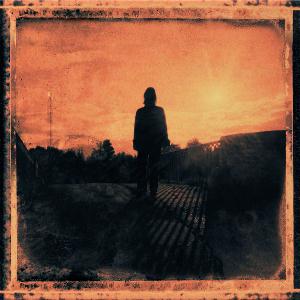
Grace For Drowning (Steven Wilson)
Year: 2011
I like Porcupine Tree. They make nice music. Wilson is obviously a big part of that. However, they have never once wowed me. Signify, In Absentia, Deadwing and Fear of a Blank Planet have all been enjoyable albums to my ears, but I would not consider any of them masterpieces. Now Wilson has released a couple of solo albums, with Grace For Drowning being the more highly acclaimed of the two. This has me slightly perplexed as I have found nothing to be enthusiastic about with this latest release.
I find Grace For Drowning to be plodding and slightly boring. It reminds me of Deadwing and Signify at times, yet muffled and ambient in the Sky Moves Sideways vein. The cornerstone of the album is the 23-minute epic, "Raider II." While I am a big fan of epics, this one is just too ambient for my taste. I find myself bored and wondering why Wilson felt the need to drag this out such as King Crimson did way back when with "Moonchild." Much of the song (which is basically completely instrumental) is just slowly moving soundscapes that ultimately build in intensity with a climatic percussive crash (almost identical to "Larks' Tongues in Aspic"). The whole thing leaves me thinking "gosh, I would have much preferred to listen to a 23-minute loop of Talking Drum, the noodling of Moonchild and the climax of LTIA." Oh well, we all have our different tastes as a number of people obviously love this epic.
To me, the highlights of the album are "Postcard", "Track One" and "Remainder the Black Dog." These are strong songs with nice melodies and musical arrangements. I find "Postcard" especially beautiful while "Remainder" would have fit nicely on the Signify album. The rest of the album is fairly forgettable, in my opinion and overall leaves me with the same feeling that I get when listening to The Incident. It's okay, but nothing to get excited about.
Saturday, July 14, 2012
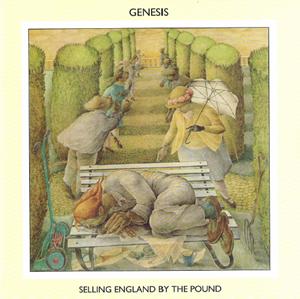
Selling England by the Pound (Genesis)
Year: 1973
The Good, Bad and the Average
The Good: Firth of Fifth and The Cinema Show
While these two songs are very solid, they do not make this album a masterpiece. "Firth of Fifth" is the third song and showcases some nice instrumentation in the way of keyboards early and guitar late. Banks and Hackett showcase their skills rather nicely in this song and the overall effect is impressive. "The Cinema Show" is an epic which weaves a nice story with a melody that never bores or gets old. The whole band contributes nicely with Gabriel doing some emotive singing which adds some texture to the work.
The Average: Dancing with the Moonlit Knight, I Know What I Like, More Fool Me, After the Ordeal
"Dancing with the Moonlit Knight" starts off well but seems to drag about midway through the song. In my humble opinion, it is long only for the sake of being long. Good progressive rock songs should capture your attention and not let go. This song just doesn't do that for me. After about three minutes, I am ready for the next song, which is..."I Know What I Like" has a catchy melody and is fun to sing along with, but it does not grab my imagination. So while I am glad that the day has broken on the "Moonlit Knight" with this song, I am already looking ahead to the aforementioned "Firth of Fifth". "More Fool Me" showcases Collins' vocals nicely. But other than that, it is a pretty forgettable love (pop?) song which really slows the pace coming in right after "Firth of Fifth." "After the Ordeal" is basically an intermission piece stuffed between the two eleven-minute epics on this disc. It is so forgettable in this position that I can't even think of anything to say about it.
The Bad: The Battle of Epping Forest, Aisle of Plenty
My primary gripe with this album comes in the form of "The Battle of Epping Forest." This is a goofy song that is almost painful for me to listen to. Gabriel seems to have fun with the various vocal jokes that he pulls off when performing this song. But I would much prefer to hear him do the Slippermen than this mess. The song begins with a march beat and flutes and turns into a musical brawl of epic (pun most certainly intended) proportions. Hackett does insert a few fun little guitar riffs, but this song could just as easily be mistaken for a disco tune (in certain parts) as it could for progressive rock. "Aisle of Plenty" is basically a 90 second reprise of the opening of the album with Gabriel adding some non-sensical utterances as the album closes. I'm not sure why the band felt the need to end the album this way, but there it is. A disappointing closure to an otherwise decent album.
Overall
I like Genesis and I like this album. So while I would recommend it, I feel I should point out its flaws with this review. The good songs are good enough to carry this album, but I can't for the life of me say that this is a masterpiece of progressive music. I much prefer Genesis' next effort in The Lamb Lies Down on Broadway.
The Lamb Lies Down on Broadway (Genesis)
Year: 1974
Like all good prog, the first time I listened to this album, I scratched my head and thought "What the heck is this crap?!?" And though I still haven't figured out what all the crap on this album is, I have grown to really appreciate this culmination of music.
It seems that most hardcore Genesis fans have a hard time liking The Lamb compared to Foxtrot, Selling England, etc. However, I much prefer this album. I am a sucker for concept albums (even if I don't always understand exactly what the concept is). There are so many unforgettable passages in this two-disc experience beginning with the opening piano solo.
While I do recognize that the album isn't perfect due to some "less than musical" moments ("The Waiting Room" and "Silent Sorrow in Empty Boats"), there are so many great tunes packaged in The Lamb that it would be wrong to think of this as being anything less than excellent as far as a musical album is concerned. Songs such as "The Lamb Lies Down on Broadway", "In the Cage", "The Carpet Crawlers", "Lilywhite Lilith", "Anyway", "The Lamia", "The Colony of Slippermen" and "It" are all great songs. Some of them are haunting in their solemn melodies and some are thought-provoking with their anguished lyrics, but all are great
music, in my opinion.
I highly recommend this album.
Foxtrot (Genesis)
Year: 1972
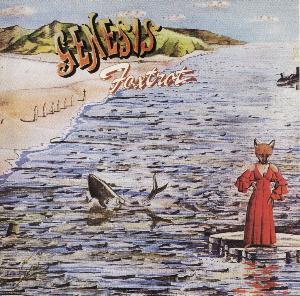
While there is some very good music on this album, I just don't see it as being amazing as most prog enthusiasts will tell you. I refuse to agree with the majority that "Supper's Ready" is one of the best epics ever. In my opinion, it's dull and offers very little substance both lyrically and musically. I think that "Can-Utility and the Coastliners" is the highlight of the album, with "Time Table" and "Horizons" offering some good stuff in smaller packages. "Watcher of the Skies" kicks things off and is the poster child for the mellotron, but otherwise doesn't do much for me. It starts off slowly and never seems to go anywhere. "Get 'em Out By Friday" is fun and is a nice change of pace on this album. While I like this album, I cannot in good conscience say it is one of the best ever. Ho-hum.
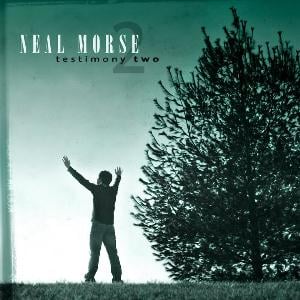
Testimony 2 (Neal Morse)
Year: 2011
Having already given masterpiece status to two of Morse's other albums (One and ?), I thought it unlikely that he would be able to put out another stellar album after his more recent albums (Sola Scriptura and Lifeline) left me a little disappointed. I was wrong. Testimony 2 is a beautiful work and a true masterpiece.
I have been critical of Morse in the past for self-plagiarizing; but with this album being a sequel, it made sense to do that very thing. Interestingly enough, the reoccurring themes from the first Testimony album are brought to life in a fantastic way. Testimony 2 is full of dizzying overtures, soaring melodies and catchy themes which can't help but please. There are so many highlights, it's difficult to determine where to begin: "Overture No. 4" and "Time Changer" are brilliantly written and performed (with some nice contributions from guys named Nick D'Virgilio, Dave Meros and Alan Morse). "Jayda" is emotionally moving. "Jesus' Blood" and "The Truth Will Set You Free" are Neal Morse at his best with soulish singing and energetic playing on a wide assortment of instruments. "It's For You" is a fantastic tune with some stunning guitar work performed by Paul Bielatowicz.
Disc 1 closes with "Crossing Over" which is a nice ending, but also is my one quibble with the whole album in that it goes a little longer than I think it should. Morse likes having big drawn-out endings and for once I'd like to see something finish strong and abruptly. It's a minor quibble, but one I thought worth mentioning. I consider this a masterpiece without hesitation and I haven't even gotten to the best part...
Disc 2!
Three songs - all very strong - with "Seeds of Gold" being a 26-minute epic and an outstanding one at that. I highly recommend this album to any lover of prog music.
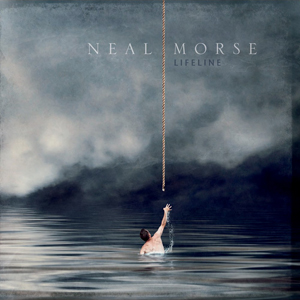
Lifeline (Neal Morse)
Year: 2008
Let me preface this review by admitting to being a rather big fan of Neal Morse's music, whether it be his solo output or his work with Spock's Beard and Transatlantic. I have enthusiastically given two of his solo albums 5-star ratings (One and ?) and been amazed at the volume of music he is able to write, record and produce in a short period of time. However, I think there is perhaps a noticeable downside to being such a prolific songwriter: the similar musical nuances that inevitably get re-used in a short period of time before the overall music style has a chance to sufficiently evolve. More than any artist I can think of, Morse gets blamed for self-plagiarizing and I believe this to be warranted. Morse makes it fairly obvious in his music where his influences lie and lately, he seems to be most influenced by his own past work.
I say all this in my review of Morse's latest release, Lifeline, since on the first few listens it is fairly distracting how much this sounds like a mesh of Snow, V, Sola Scriptura and One. I remember the first time I listened to Riverside's first album, Out of Myself. In my first few listens to that album, I felt like I was listening to a Pink Floyd cover band that had switched some words around and thrown in some growls for good measure. But after getting deeper into that album, that feeling went away and it sounded more like...Riverside. Unfortunately, with Lifeline, I just can't shake that deja vu feeling as some of the passages are just too similar, if not exactly the same as previous Morse music.
The album starts off with a fairly good song in the title track, Lifeline. It runs for over 13 minutes and moves at a great pace making it seem like a much shorter song. As others have noted, it sounds much like the opening tune from the One album (The Creation). This song has grown on me nicely since I first heard it and I pretty much enjoy it from start to finish.
The next four songs are all between 4 and 6 minutes and aren't especially noteworthy, with the exception of Leviathan which is just quirky enough to raise your eyebrows. While the tempo of Leviathan is reminiscent of Author of Confusion from One, this is the most unique song on the album and is another big grower. As I said, the other three are "lost in the shuffle" as they are typical Morse ballads in that they have nice tunes, uplifting lyrics and the usual acoustic guitar solo similar to the one in "We All Need Some Light".
"So Many Roads" is the big epic. For whatever reason, I'm just not that crazy about it. As a Morse fan, I usually absolutely love his long epics, but this one just doesn't quite measure up. It doesn't seem to have those bone-chilling moments that I have come to expect and get in good supply in All of the Above, The Great Nothing, The Creation, The Separated Man, The Door, ?, etc. etc. etc.
"Fly High" finishes the album off and is perhaps the catchiest tune on the whole album. Weighing in at six minutes and change, it leaves a great taste in my mouth at the conclusion and does not seem to have all the sameness that plagues much of this album.
While I think there is lots of great music on this album, it falls a bit flat on my ears. I actually think this album will be better received by people not familiar with Morse's other music, as they won't be distracted by the similarities to his previous work.
Subscribe to:
Posts (Atom)